Purpose: To help children, young people, adults and community members gain practical digital skills they can use at home, in business and in everyday life.
Community Digital Learning takes place in villages and other community settings. We organise sessions for people who may not have had access to computer training or who use a smartphone without knowing many of its useful features. The sessions are open to different age groups and are planned around the interests and starting levels of participants.
Sessions are practical. Participants are given time to use devices, practise tasks, ask questions and learn at a pace that suits their experience. We work with the equipment and connectivity available, and adapt activities where communities have limited resources.
In the field
What this work looks like
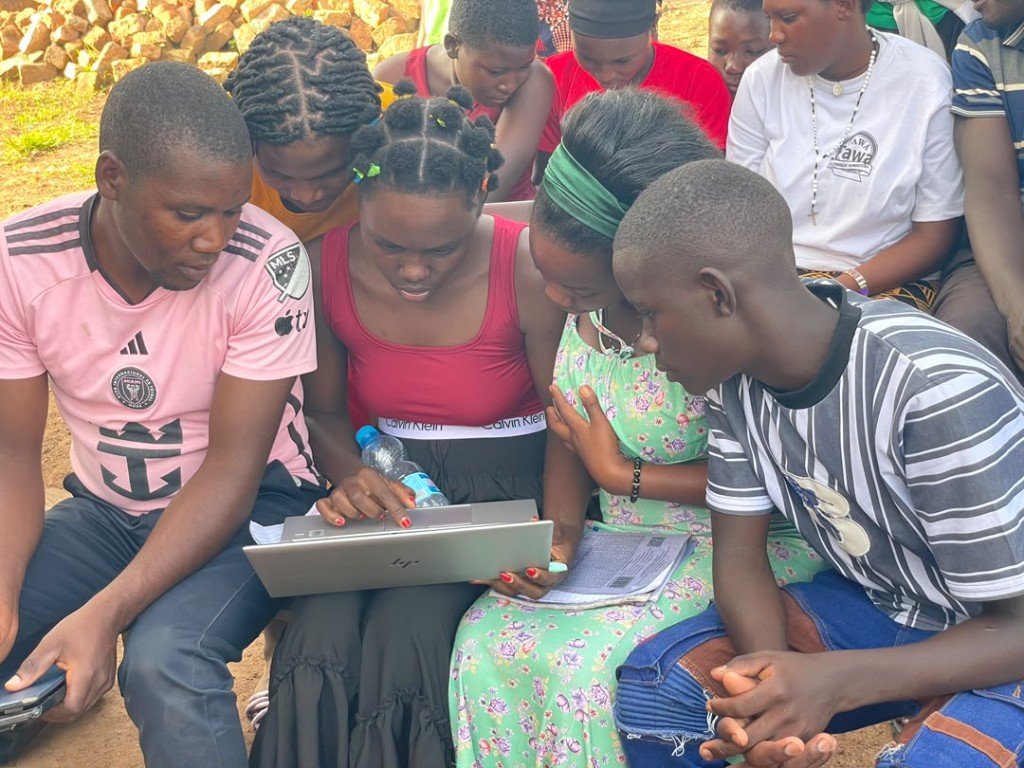
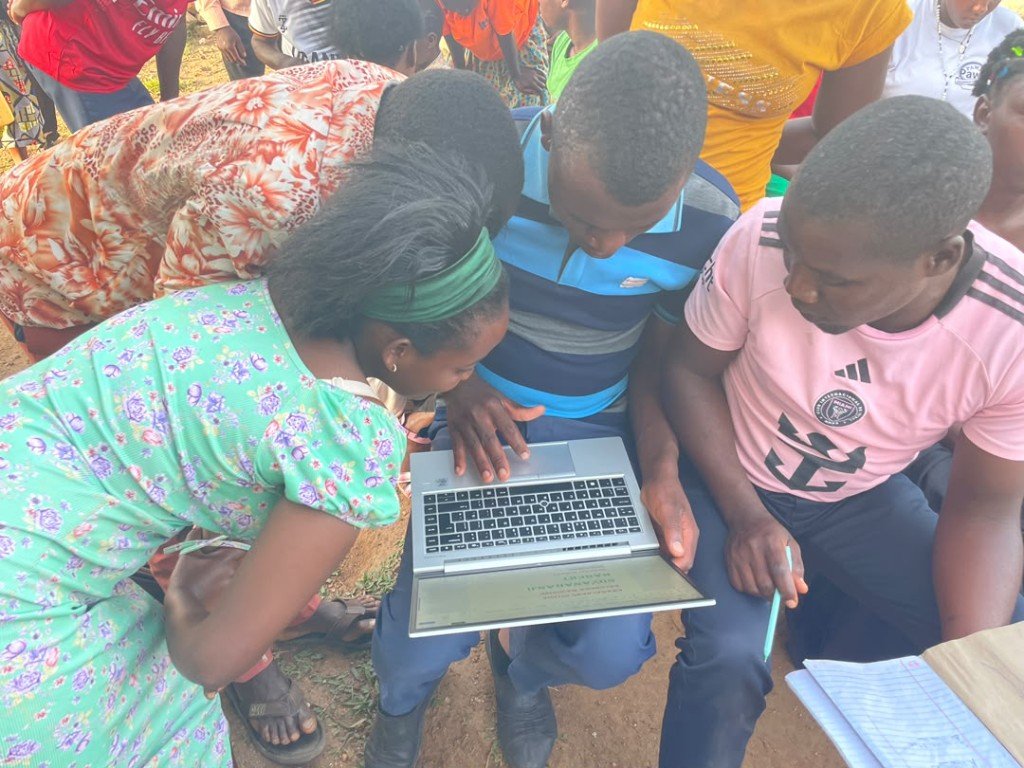
Peer learning as neighbours practise digital skills together outdoors.Hands-on collaborative practice during a community digital session.
What we teach and practise
Smartphone use: making calls, saving contacts, using settings, managing storage, taking and sharing photographs, installing and using useful applications and keeping a phone secure.
Computer basics: switching on a computer, using the mouse and keyboard, opening programmes and saving files.
Internet use: connecting to available networks, searching for information, using websites and accessing learning or public information resources.
Communication: using email, messaging applications and video calls, and sharing information appropriately.
Online safety: recognising scams and false information, avoiding suspicious links, protecting personal details and using strong passwords.
Digital documents: typing, preparing simple letters and forms, saving documents and sharing files.
Digital tools for livelihoods: using phones to communicate with customers, take product photographs, keep simple records, promote goods and look for useful farming or business information.
Accessing services: learning how to find and use relevant online services and information, with guidance appropriate to the participants.
STEM for community enterprise: practical technology ideas that support problem-solving in farming, trade, production and local services.
AI for small business: simple, careful use of AI-supported tools for writing, organising information, customer messages, learning and product ideas - always with human judgement.
Digital marketing and visibility: preparing clear product photos, posts and messages so local businesses and producers can reach more customers.
How it happens
A session may be organised as a community digital camp, a group lesson or a smaller practical gathering. Some participants may begin with how to use a smartphone; others may be ready to practise email, documents or online business promotion. We start from what people know and build from there.
Who this is for
Parents and caregivers, mothers and fathers
Children, young people, women and men
Farmers, local leaders, community groups and other residents
How it connects
Community Digital Learning is one pathway of our Digital Learning programme. A farmer may learn smartphone skills here and later receive support from a Ranger to list produce on Community MarketLink. People facing barriers can also be supported through Digital Inclusion or SheTech.
We take opportunities to the people
Explore the rest of our programmes and projects, or get in touch about a school or community visit.