
Listen locally
Schools, families, young people, farmers and local leaders shape what we offer.
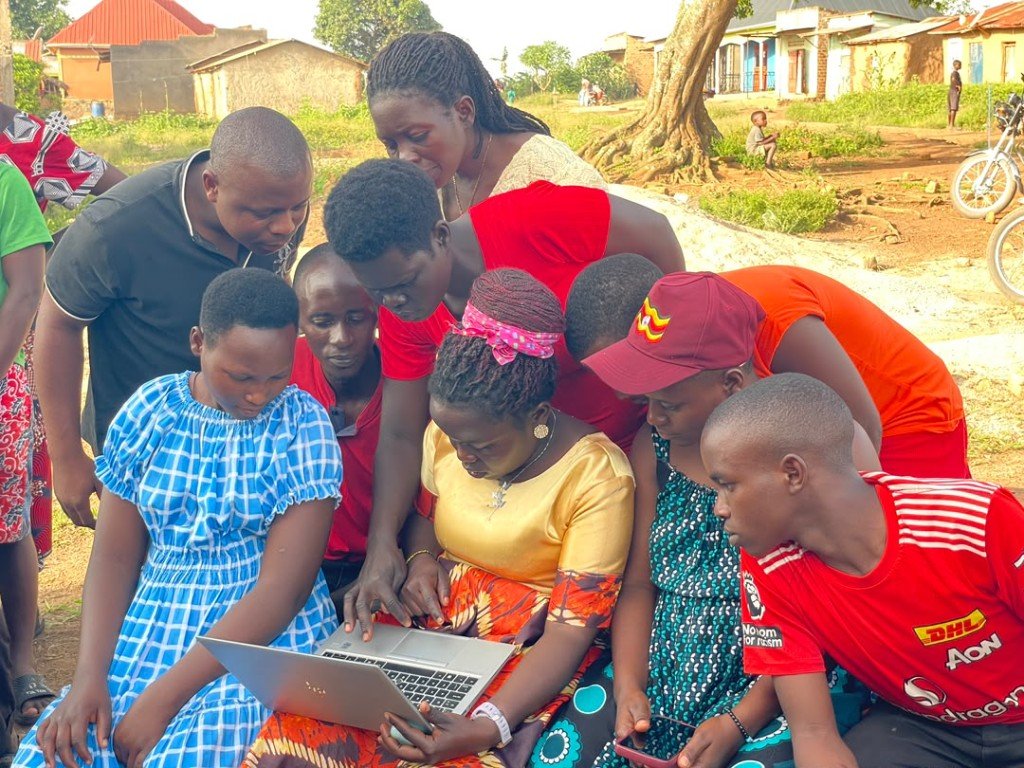
Talent is everywhere, but opportunity is not always.
We started because too many learners, women, and youth never get a fair chance to use a computer. So we take devices and practical lessons into schools and communities, skill people for work and livelihood, then train local champions to keep the learning going.
In many communities, children complete primary school with little or no opportunity to use a computer. Some schools have few devices, limited electricity or no reliable internet. Many parents and adults use mobile phones but have had little chance to learn how to use them for finding information, accessing services, communicating safely or improving their businesses. Young people may be interested in technology but have nowhere nearby to practise skills such as coding, graphic design or website development. Farmers and small producers can have good products but struggle to reach buyers and get fair prices.
Our current work is based in Mubende District. We are building our experience, community relationships and delivery model here. Our long-term vision is to extend the work to other districts and communities across Uganda, including rural and hard-to-reach areas where access to digital learning and useful technology remains limited.
Schools, families, young people, farmers and local leaders shape what we offer.
We take learning into classrooms and community spaces instead of waiting for people to travel.
Lessons from Mubende guide expansion into other districts when capacity and partners allow.
Uganda's digital divide is not simply about whether a mobile network reaches a village. It is also about whether people can afford a suitable device and data, access electricity, find someone to teach them, practise regularly and use technology for something that matters in their lives.
Uganda's 2024 Population and Housing Census reported that only 4% of people aged 10 and above used a computer. It also reported internet use of 16.6% in urban areas compared with 4.3% in rural areas.
The Uganda Communications Commission has continued to identify affordability, limited digital skills, device access and electricity as barriers to meaningful use of digital services.
UNICEF's reporting on digital education in Uganda describes uneven access to school internet and devices, with many schools unable to make digital learning part of everyday teaching.
These national findings help explain why our work matters. They do not replace the experience of each community. We listen to schools, families, young people, farmers and local leaders to understand the particular challenges and opportunities in the places where we work.
Digital Futures began with a commitment to work with communities in Mubende District. We want children to have the chance to learn with technology, adults to feel confident using digital tools, women and people facing barriers to access opportunities, and local producers to make better use of information and markets. We want community volunteers to help lead this work and local institutions to take part in shaping it.
Our long-term ambition is to take these opportunities to more communities across Uganda. We will grow by learning from the people we work with, building strong local partnerships and developing practical models that can be sustained. We believe talent is everywhere, but opportunity is not always. Our work is about bringing useful skills, tools and opportunities closer to people.